
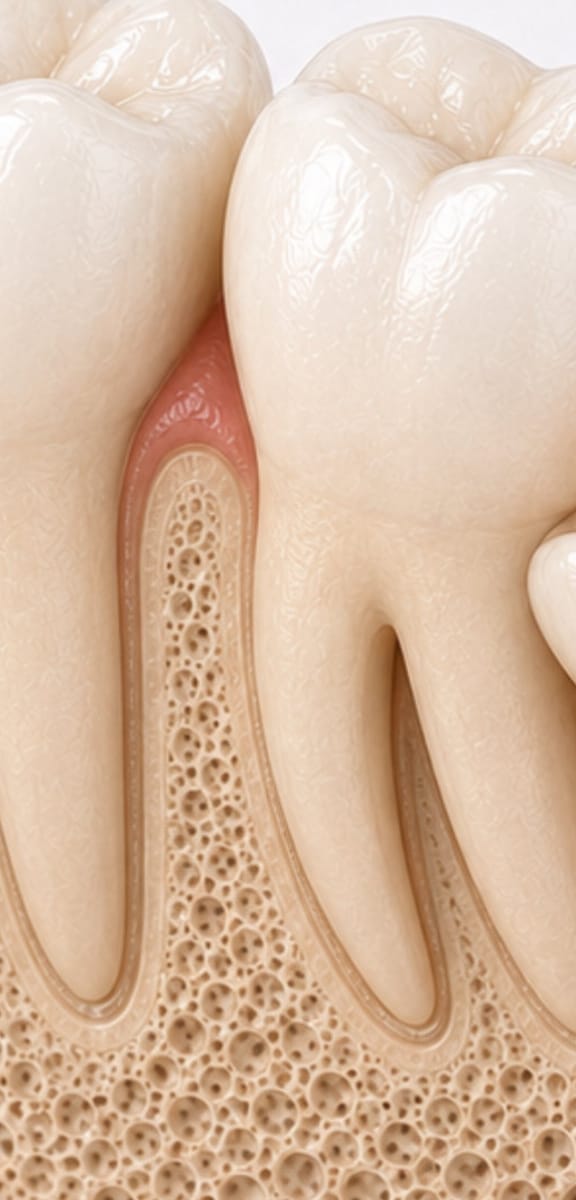

What are wisdom teeth?
Wisdom teeth are the third molars at the back of the mouth. Some come through normally; others remain partly or fully beneath the gum or grow at an angle. An impacted tooth is one that has not erupted into its expected position.
At Tomlinson Dental, we assess symptoms, access for cleaning, neighboring teeth, and imaging when needed. The aim is to decide whether a tooth is causing a problem or needs monitoring, rather than assuming every wisdom tooth must be removed.
Sources: NHS: Wisdom tooth removal
Removal or monitoring?
Reasons to discuss removal
Repeated infection, decay, damage to a neighboring tooth, or other disease may make removal appropriate. Pain needs assessment because it can come from another tooth or condition.
Reasons to keep reviewing
A tooth without a current problem may be monitored. Its position and the ability to keep it clean matter. Ask what changes would lead to a different recommendation.
Sources: NHS: Wisdom tooth removal
What happens if removal is recommended?
Assess the position
The examination and imaging help show the roots and nearby structures. We discuss the difficulty of removal and whether referral is appropriate.
Plan comfort and consent
The treating clinician explains anesthesia, any sedation, and the risks relevant to the tooth. Arrange an escort if required.
Remove and review
Removal may require a gum incision or dividing the tooth. You receive instructions for the socket and any stitches, along with contact details for concerns.
Sources: NHS: Wisdom tooth removal
Recovery after wisdom tooth removal
Expected recovery
Soreness, swelling, and temporary difficulty opening the mouth can occur. Follow your clinician’s instructions about food, cleaning, activity, and pain relief.
When to seek advice
Contact the treating team about bleeding that does not settle with the instructions given, worsening pain, swelling, or fever. Difficulty breathing or swallowing needs emergency medical care.
Dry socket can cause significant pain after an extraction and needs dental assessment. Other risks, including altered sensation near some lower wisdom teeth, should be discussed before surgery. Your own anatomy affects the risk.
Sources: NHS: Wisdom tooth removal
What affects removal costs?
The number and position of teeth, surgical complexity, imaging, and sedation affect the fee. A straightforward extraction and a deeply impacted tooth may involve different care.
Ask what the quote includes and who will provide any required specialist treatment and follow-up.
Payment and dental benefits
We accept cash and cards. Third-party financing is available, subject to approval.
Although we are not contracted with any dental insurance company, we gladly help submit claims so your provider can reimburse you directly. Payment is due in full at the time of service; we do not provide insurance estimates.
Review insurance and payment optionsWisdom tooth questions
No. Each tooth should be assessed. The recommendation depends on the findings and the overall treatment plan, not simply the number of wisdom teeth present.
Recovery varies with the procedure and your work. Ask the treating clinician what to plan for, especially if your job is physical or you are having sedation.
Sources: NHS: Wisdom tooth removal
Medication may have a role in treating infection, but it does not change the position of an impacted tooth. Recurring symptoms need reassessment and a plan for the underlying problem.
That depends on the anesthesia or sedation used. Confirm transport arrangements beforehand and follow the recovery restrictions provided.
Sources: NHS: Wisdom tooth removal


Arrange a Wisdom Tooth Assessment
Tell us about pain, swelling, or repeated problems so we can assess the tooth and discuss your options.
3907 North Boulevard, Tampa, FL 33603
Find us in Tampa, FL


Medically reviewed by Angella Tomlinson, DDS, PA