
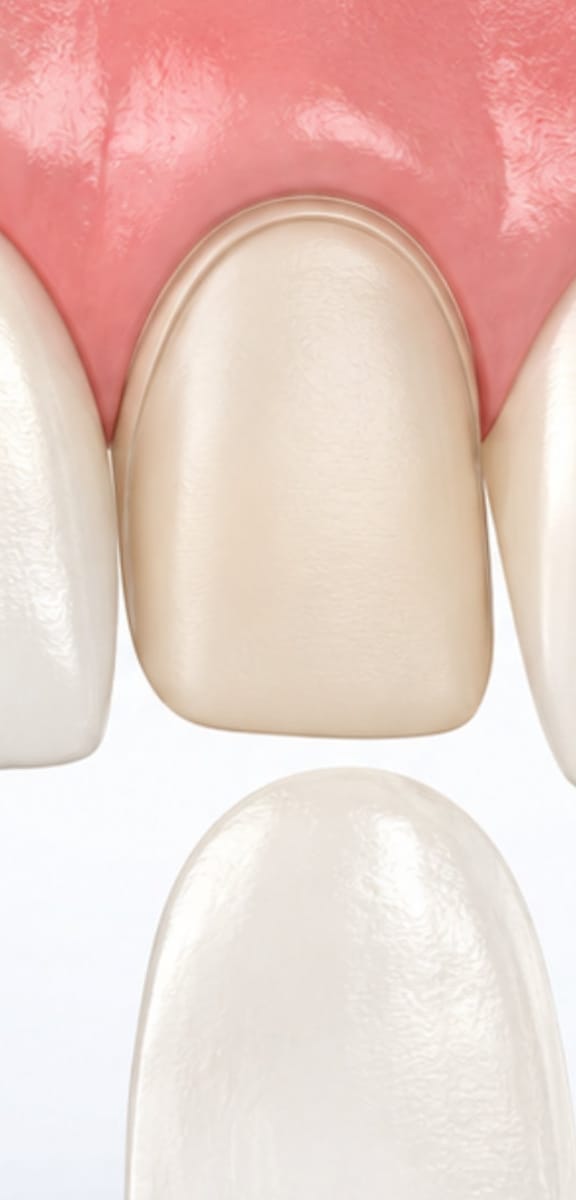

What can porcelain veneers change?
Veneers are thin coverings bonded to the front of teeth to change their appearance. They can address selected chips, gaps, discoloration, and uneven shapes. A veneer covers less of the tooth than a crown.
At Tomlinson Dental, we start with the change you want and the health of your teeth. Dr. Angella Tomlinson’s continuing education includes cosmetic dentistry. Read her background.
Understand the commitment
Porcelain veneers usually require enamel preparation, so treatment is not reversible. They can chip, loosen, or need replacement later. We should discuss those tradeoffs before you choose treatment.
Sources: ADA: Veneers
How are porcelain veneers placed?
Discuss the result
We examine your teeth and bite and discuss shape, shade, and which teeth need treatment. Bring examples of what you like, but expect a plan based on your own mouth.
Prepare and record
The teeth are prepared and impressions or scans record their shape. Temporary veneers may be needed while the laboratory makes the porcelain restorations.
Check and bond
The dentist checks the fit, appearance, and bite before bonding the veneers. Ask about any concern with the planned result before they are secured.
Sources: ADA: Veneers
What affects the cost of veneers?
The number of teeth, laboratory work, materials, and any treatment needed before veneers affect the fee. A single veneer and a multi-tooth plan should be considered separately.
Ask whether temporary veneers, adjustments, and any proposed gum or restorative work are included. Cosmetic treatment may not be covered by your plan; confirm this with your insurer.
Payment and dental benefits
We accept cash and cards. Third-party financing is available, subject to approval.
Although we are not contracted with any dental insurance company, we gladly help submit claims so your provider can reimburse you directly. Payment is due in full at the time of service; we do not provide insurance estimates.
Review insurance and payment optionsVeneers, bonding, or whitening?
| Option | What it changes | What to consider |
|---|---|---|
| Porcelain veneers | The visible surface, shape, and shade | Enamel preparation and future replacement |
| Composite bonding | Selected chips, edges, or gaps | May need polishing or repair |
| Whitening | The color of natural teeth | Does not reshape teeth or whiten existing restorations |
If tooth position is the main concern, clear aligners may deserve consideration. We can explain whether moving teeth or changing their surfaces better addresses your goal.
Sources: ADA: Veneers · ADA: Teeth whitening
Are veneers appropriate for my teeth?
Health and bite come first
Decay, gum disease, heavy grinding, or a large existing restoration can change the recommendation. Veneers do not treat underlying disease or correct every bite problem.
Plan for maintenance
Brush with fluoride toothpaste, clean between teeth, and avoid using teeth to open packages or bite hard objects. Tell us about grinding so we can discuss protection. Veneered teeth can still develop decay.
Sources: ADA: Veneers
Questions about porcelain veneers
There is no standard number. We can compare treating a single tooth with changing several visible teeth. Ask what each additional veneer contributes to the result and the cost.
Whitening changes natural teeth but does not whiten veneers. Discuss your preferred shade before treatment so the sequence of whitening and restorations is planned together.
Sources: ADA: Teeth whitening
Contact the practice for an assessment. A veneer may need an adjustment, repair, rebonding, or replacement. Avoid trying to glue or reshape it yourself.
Sources: ADA: Veneers
Ask about whitening or composite bonding where appropriate. We can explain what each option would achieve and how much tooth preparation it requires.


Discuss Porcelain Veneers
Tell us what you would like to change about your smile. We’ll explain the options and help you weigh the commitment.
3907 North Boulevard, Tampa, FL 33603
Find us in Tampa, FL


Medically reviewed by Angella Tomlinson, DDS, PA