
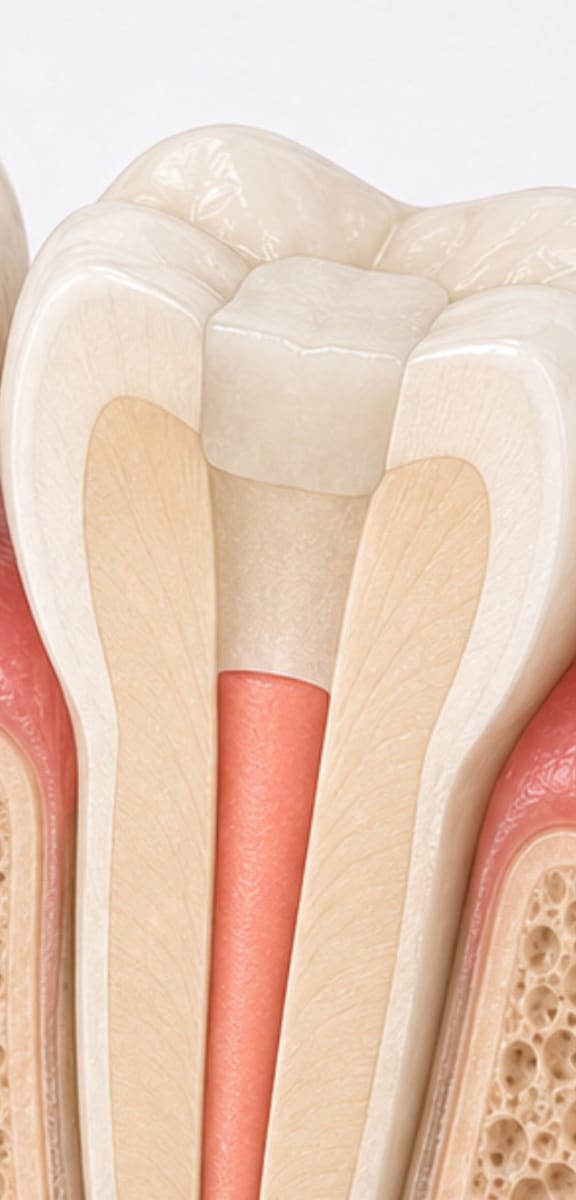

Why might a tooth need root canal treatment?
The pulp inside a tooth contains nerves and blood vessels. Inflammation or infection can develop after deep decay, cracks, or other damage. Root canal treatment removes affected pulp, cleans the canals, and seals them.
At Tomlinson Dental, we assess the cause of pain and whether the tooth can be restored. Symptoms alone cannot establish which tooth needs treatment or whether a root canal is the right option.
Sources: AAE: Root canal treatment
How does root canal treatment work?
Diagnose and numb
The assessment includes examination and appropriate imaging. Local anesthesia is used, and you can discuss anxiety or discomfort before treatment begins.
Clean and seal the canals
The pulp is removed through an opening in the tooth. The canals are cleaned, shaped, and filled. The number of visits depends on the tooth and treatment complexity.
Restore the tooth
A permanent restoration protects the treated tooth and restores function. A crown may be needed, especially for a back tooth; confirm this part of the plan and its timing.
Sources: AAE: Treatment explained
What affects root canal costs?
The tooth involved, canal complexity, and whether this is first treatment or retreatment affect the fee. A build-up or crown afterward may be separate.
Ask for the complete plan, including the final restoration, and whether any part of the treatment requires a referral.
Payment and dental benefits
We accept cash and cards. Third-party financing is available, subject to approval.
Although we are not contracted with any dental insurance company, we gladly help submit claims so your provider can reimburse you directly. Payment is due in full at the time of service; we do not provide insurance estimates.
Review insurance and payment optionsRoot canal treatment or extraction?
Keeping the tooth
Root canal treatment may allow a restorable tooth to remain in place. The condition of the remaining structure and its support affects the outlook.
Removing the tooth
Extraction may be appropriate when the tooth cannot be predictably restored. It also raises the question of whether and how to replace it, with additional treatment considerations.
We’ll explain what the examination shows, the outlook for keeping the tooth, and the treatment involved in each option.
Sources: AAE: Treatment explained
Recovery and when to contact us
Some tenderness can follow treatment. Follow the instructions for pain relief and avoid heavy chewing on the tooth until it has the recommended restoration.
Contact us about significant or worsening pain, swelling, an uneven bite, or a lost temporary restoration. Facial swelling or fever needs prompt assessment. Difficulty breathing or swallowing requires emergency medical care.
Sources: AAE: Treatment explained
Sources: NHS: Dental abscess
Root canal questions
Local anesthesia is used to keep you comfortable during treatment. Tell the team if you feel pain so it can be addressed. Tenderness afterward can occur and should be discussed if it is persistent or worsening.
Sources: AAE: Treatment explained
Antibiotics do not remove infected tissue from inside a tooth or restore the tooth. Your dentist will determine what dental treatment is needed and whether medication has a role.
Sources: AAE: Treatment explained
The final restoration protects the remaining tooth and helps prevent reinfection. The type depends on the tooth and how much structure remains; ask whether a crown or another restoration is planned.
Sources: AAE: Treatment explained
Yes. Persistent or new problems can require reassessment, retreatment, surgery, or extraction. Ask about the cause and the options rather than assuming the tooth must be removed.
Sources: AAE: Treatment explained


Arrange an Assessment for Tooth Pain
Call or book a visit so we can identify the problem and discuss treatment. Let us know about swelling or severe symptoms when you contact us.
3907 North Boulevard, Tampa, FL 33603
Find us in Tampa, FL


Medically reviewed by Angella Tomlinson, DDS, PA