
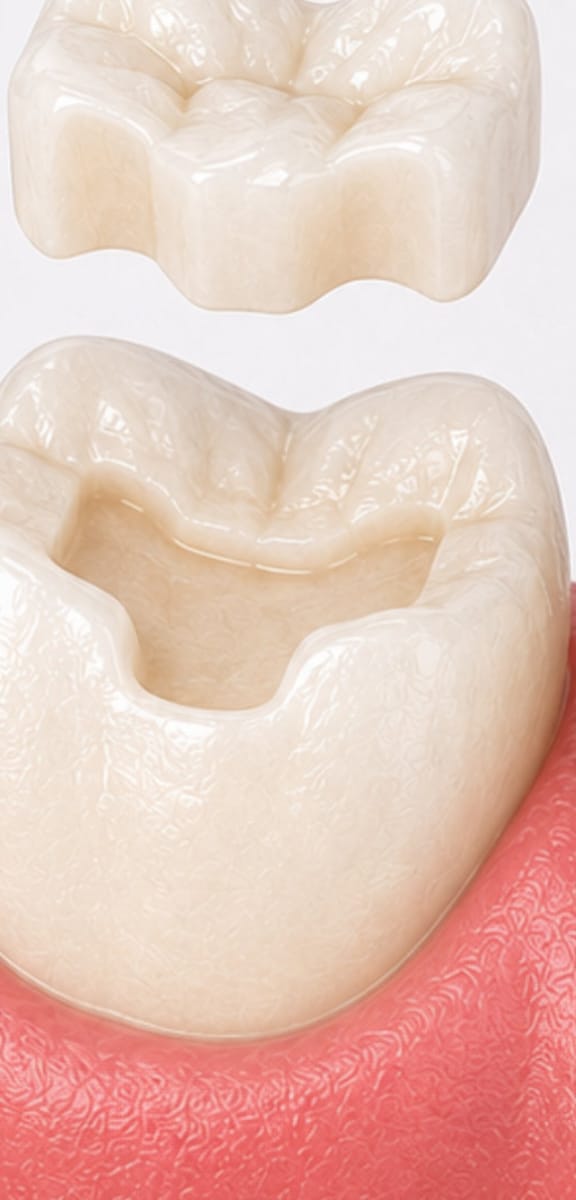

What are inlays and onlays?
An inlay repairs an area within the raised points, or cusps, of a tooth. An onlay extends over one or more cusps. These restorations are made to fit the prepared tooth rather than shaped entirely as a direct filling.
At Tomlinson Dental, we assess the amount and location of damage. The question is whether a partial restoration can protect the tooth adequately, or whether a filling or full crown would be more appropriate.
Sources: ADA: Filling options
Sources: NHSBSA: Inlays and onlays
How is an inlay or onlay fitted?
Assess the remaining tooth
We check the damage, existing filling, bite, and symptoms. A deep crack or pulp problem can change the treatment needed.
Prepare and record
The damaged area is prepared and an impression or scan records the tooth. A temporary restoration may be used while the final one is made.
Fit and secure
The restoration is checked for fit and bite and then secured. We’ll explain cleaning and what changes to report.
Sources: NHSBSA: Inlays and onlays
What affects inlay and onlay costs?
The size of the restoration, material, and fabrication work affect the fee. The condition of the tooth and any additional treatment also matter.
Ask how the recommended repair compares with a filling or crown for this tooth, including preparation, fees, and maintenance.
Payment and dental benefits
We accept cash and cards. Third-party financing is available, subject to approval.
Although we are not contracted with any dental insurance company, we gladly help submit claims so your provider can reimburse you directly. Payment is due in full at the time of service; we do not provide insurance estimates.
Review insurance and payment optionsChoosing the amount of coverage
Partial coverage
An onlay can cover weakened cusps while leaving other parts of the tooth uncovered. It still requires preparation and is not appropriate for every large filling or fracture.
Full coverage
A crown may be considered when more extensive protection is needed. The extent of damage, bite, and remaining tooth structure guide that decision.
Ask us to show you the affected area and explain why the proposed coverage is needed. Avoid choosing solely by the name or price of the restoration.
Sources: ADA: Crowns · ADA: Filling options
What needs assessment first?
Pain on biting, a deep cavity, or a crack needs diagnosis before selecting a restoration. A partial covering cannot address an infection inside the tooth.
Tell us about grinding or a history of restorations breaking. We can discuss the material and protection appropriate to your bite, and whether a different treatment offers a more suitable option.
Inlay and onlay questions
No. Indirect restorations may use ceramic, metal, or other suitable materials. Ask what is proposed for your tooth and why.
Sources: ADA: Filling options
No. Preserving sound tooth is valuable, but the restoration also needs appropriate support and coverage. The best choice depends on the damage.
Brush, clean between teeth, and attend checkups. Report a loose restoration, sharp edge, or a change in your bite. The natural tooth can still develop decay.
The schedule depends on how the restoration is made and the preparation needed. Ask whether a temporary restoration is planned and when the final fitting will take place.
Related restorative care


Discuss Your Restoration Options
We’ll assess the tooth and compare a filling, inlay, onlay, or crown for your situation.
3907 North Boulevard, Tampa, FL 33603
Find us in Tampa, FL


Medically reviewed by Angella Tomlinson, DDS, PA