
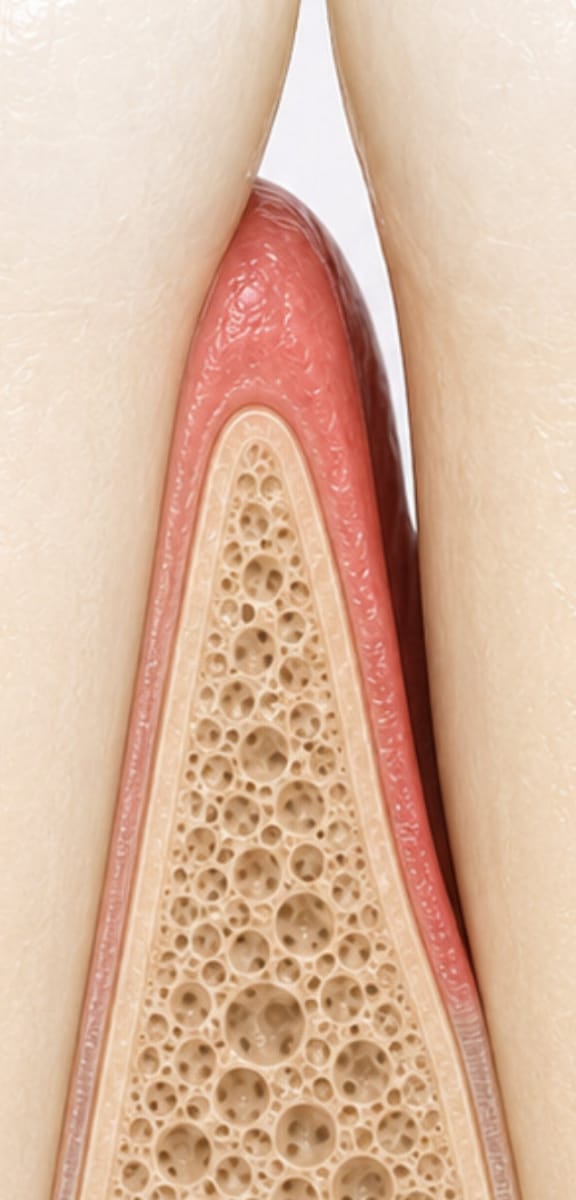

What is gum disease?
Gum disease affects the tissues that support your teeth. Plaque buildup can cause inflammation; hardened deposits, called tartar, need professional removal. Some people notice bleeding or tenderness, while others have little discomfort.
At Tomlinson Dental, we assess gum measurements, bleeding, and supporting bone to explain what is happening. You do not need to wait for pain before arranging a gum assessment.
Sources: NIDCR: Gum disease
How is gum disease diagnosed?
Talk about changes
Tell us about bleeding, bad breath, recession, loose teeth, tobacco use, medications, and health conditions.
Measure the gums
A periodontal probe measures the spaces around teeth. Bleeding and other findings help show whether inflammation is present.
Assess support
X-rays may be needed to evaluate bone around the teeth. Measurements and imaging together guide the diagnosis and treatment plan.
Sources: NIDCR: Gum disease
Gingivitis and periodontitis
Gingivitis
Inflammation is limited to the gums without the attachment and bone loss of periodontitis. Professional care and effective daily cleaning can help restore gum health.
Periodontitis
The supporting tissues and bone have been damaged. Treatment aims to control disease and protect the remaining support. Ongoing maintenance is important even when symptoms improve.
Sources: NIDCR: Gum disease
How does general health affect my gums?
Diabetes can make gum disease more likely and harder to manage, particularly when blood sugar is not well controlled. Gum disease can also make blood sugar management more difficult. Tell us about diabetes and changes in your health.
Smoking is a major risk factor and can reduce healing. We can discuss how this affects the treatment plan. Links between gum disease and other health conditions do not mean that treating gums is proven to prevent those diseases.
Sources: NIDCR: Diabetes and oral health · NIDCR: Gum disease
What treatment might I need?
Cleaning and home care
Treatment starts with the diagnosis. Professional cleaning and help with daily plaque removal may be sufficient for gingivitis. Scaling and root planing treats affected root surfaces beneath the gums when indicated.
Reassessment and further care
We check the response to treatment and plan maintenance. Persistent deep pockets or other problems may require additional care or referral for periodontal surgery.
Sources: AAP: Non-surgical treatment
Gum disease questions
Persistent bleeding needs assessment. Ask us to check your technique and recommend cleaning aids for your mouth. Avoid ignoring the area or using forceful scrubbing.
Sources: NIDCR: Gum disease
Routine cleaning does not replace lost supporting bone. Selected defects may be considered for regenerative treatment, but this is case-dependent and not a promise to reverse all damage.
Sources: AAP: Periodontal surgery
Periodontitis needs continued monitoring. Maintenance visits check stability, remove deposits, and help identify sites that need further attention.
Sources: AAP: Non-surgical treatment
The areas affected and the treatment needed determine the plan. Ask about the initial care, reassessment, and ongoing maintenance fees. See our insurance and payment information.


Arrange a Gum Health Assessment
We’ll explain your gum findings and discuss the care needed to protect your teeth.
3907 North Boulevard, Tampa, FL 33603
Find us in Tampa, FL


Medically reviewed by Angella Tomlinson, DDS, PA