
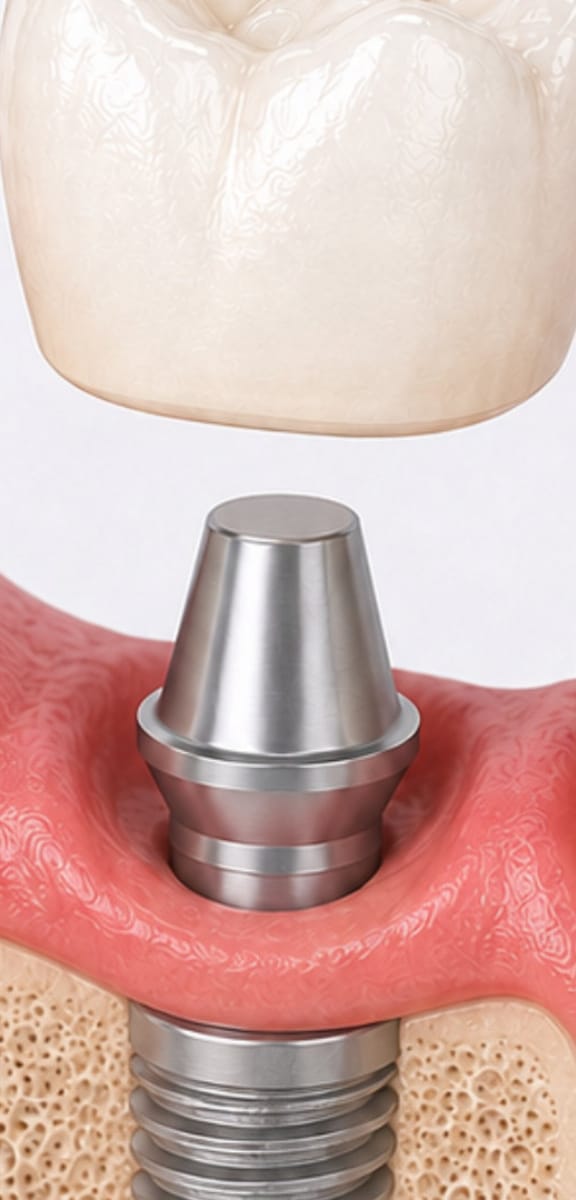

What is a dental implant?
A dental implant replaces a missing tooth root. The implant sits in your jawbone and supports a replacement tooth. For a single tooth, a connector called an abutment joins the implant to a custom crown.
Implants can also support a bridge or denture when several teeth are missing. The number of implants and the type of replacement teeth depend on your mouth and treatment plan.
At Tomlinson Dental, we assess your teeth, gums, and health before recommending treatment. Dr. Angella Tomlinson’s background includes advanced implant certification in 1997. Meet Dr. Tomlinson.
Source: FDA: Dental implants
What can an implant help with?
- Replacing a missing tooth without using neighboring teeth to support a bridge.
- Supporting replacement teeth for chewing and appearance.
- Helping preserve bone at the missing-tooth site.
Source: American Academy of Periodontology: Single-tooth implants
How does dental implant treatment work?
Treatment takes several stages. Extractions, bone grafting, and healing can add time, so the plan matters more than a fixed number of visits.
Assessment and planning
Your dentist examines your teeth and gums, reviews your health and medications, and assesses the bone at the proposed implant site. Imaging helps with planning; a 3D cone-beam CT scan may be recommended when clinically appropriate.
Preparing the site
A tooth may need to be removed, gum disease treated, or bone grafting completed before an implant can be placed. Some steps can be combined; others need their own healing period.
Placing the implant
The implant is placed in the jawbone, usually with local anesthesia to numb the area. Discuss dental anxiety and sedation needs beforehand so the team can explain suitable options.
Healing and fitting the tooth
Bone grows around the implant during osseointegration. This can take several months. Once the implant is ready, the replacement crown, bridge, or denture is fitted and the bite is checked.
Source: American Dental Association: Implant treatment · FDA: Dental cone-beam CT imaging · Cambridge University Hospitals: Implant surgery
How much do dental implants cost?
The cost depends on the treatment you need. A single implant and crown, an implant bridge, and an implant-supported denture involve different work. Extractions, grafting, and sedation can also affect the total.
Ask for a treatment plan that identifies each stage and its fee. When comparing quotes, check whether the advertised amount covers the implant alone or also includes the connector and replacement tooth.
For fees specific to your care at Tomlinson Dental, arrange a consultation. We accept cash and cards, with financing available through third-party providers subject to approval.
Using your dental benefits
We gladly work with your dental benefits. Although we are not contracted with any dental insurance company, we submit claims on your behalf so your provider can reimburse you directly.
Payment is due in full at the time of service. We do not provide insurance estimates. Ask your insurer what your plan covers and what limits apply.
Review insurance and payment optionsDental implants, bridges, and dentures
Each can replace missing teeth. The right choice depends on the condition of your mouth, your preferences, and the treatment involved.
| Consideration | Implant crown | Tooth-supported bridge | Removable denture |
|---|---|---|---|
| Support | Anchored in the jawbone | Supported by nearby teeth | Rests on gums; partial dentures may also attach to teeth |
| Removal | A fixed implant crown stays in place | A fixed bridge stays in place | Removed for cleaning |
| Treatment considerations | Requires surgery and time for healing | A conventional bridge requires preparation of supporting teeth | Can replace several or all teeth without implant surgery |
| Daily cleaning | Clean around the implant and gumline | Clean around supporting teeth and beneath the bridge | Clean the appliance and your mouth |
| Choosing an option | Bone, gum health, and healing ability matter | The condition of supporting teeth matters | Fit, comfort, and ability to manage the appliance matter |
Implants can also support dentures. See our implant-supported denture options if you are replacing a full arch.
Source: ADA: Bridges · ADA: Dentures
Am I a candidate for dental implants?
We assess your mouth and medical history together to explain whether an implant is suitable and whether any preparation is needed.
Your mouth
We check your gums, the bone available for support, and the teeth around the gap. If bone is insufficient, grafting may be an option. Existing gum disease also needs attention.
Your health
Health conditions, smoking, and medications can affect healing. Bring your current medication list and tell your dentist about previous treatment and any changes in your health. Age alone does not determine suitability.

Patient stories and smile photos
See smile photos and hear patients describe their experiences with our practice. Your own treatment options and likely results will be discussed at your consultation.
Watch patient testimonials See the smile galleryWhat is recovery like?
Recovery from surgery and healing of the implant in bone are different stages. Feeling comfortable again does not mean the implant is ready for its final tooth.
The first few days
Soreness, swelling, bruising, or some bleeding can occur after surgery. The amount varies with the procedure and your own healing. Follow the pain-control advice given by your surgical team.
Eating and daily activities
Your team will explain what to eat, how to clean the area, and when to return to work or exercise. You may need softer foods and adjustments to a temporary denture while the site heals.
Follow-up visits
Keep the planned checks even if the site feels fine. Your dentist needs to assess healing before fitting or using the replacement tooth. Contact the office if recovery is not progressing as expected.
What are the risks of dental implants?
Complications can happen during healing or later. We’ll discuss the risks relevant to your health and the proposed implant site before you decide on treatment.
Surgery and healing
Possible problems include infection, failure to bond with bone, and injury to nearby teeth, nerves, or the sinus. Nerve injury can cause altered sensation or numbness. A failed implant may need removal or further treatment.
Problems after treatment
A connector can loosen, the bite may need adjustment, or the tissues around an implant can become inflamed. Report a loose or painful implant promptly rather than waiting for a routine checkup.
Source: FDA: Benefits and risks
How do I care for dental implants?
Clean around your implants every day and attend regular dental visits. The team can show you how to reach beneath a bridge or around a denture attachment, where cleaning may need different tools.
Inflammation around an implant is called peri-implant mucositis when it affects the soft tissues. Peri-implantitis also involves loss of supporting bone. Early assessment matters because these problems can progress.
Source: American Academy of Periodontology: Peri-implant diseases
Changes to report
- Red, tender, or bleeding gums around an implant.
- Pain or a feeling that the implant or tooth is loose.
- Difficulty cleaning around the replacement teeth.
Call (813) 209-0338 if you notice a problem.
Questions to ask at your consultation
Bring the questions that matter to you. These are useful starting points when reviewing a proposed treatment plan.
Your treatment
- Can the existing tooth be saved, or does it need to be removed?
- What are my alternatives to an implant?
- Will I need grafting or other treatment first?
- Who will carry out each stage of treatment?
Your schedule and costs
- What can I wear in the gap while I heal?
- How many visits should I plan for?
- Which stages and follow-up visits are included in the fee?
- What ongoing maintenance should I budget for?
Dental implant questions
Sometimes an implant and replacement tooth can be placed at the same visit. This depends on the case; it is not suitable for everyone. Ask whether a proposed same-day tooth is temporary and what healing restrictions apply.
Source: ADA: Implant treatment
A temporary crown, bridge, or denture may be possible. Discuss this before treatment, especially for a visible front tooth. The temporary option must allow the implant site to heal.
Source: AAP: Single-tooth implants
Only an assessment can establish this. If there is not enough bone to support an implant, your dentist may discuss grafting or a different replacement option. Ask how any additional procedure affects the plan and healing time.
Implants can provide long-term tooth replacement, but no individual lifespan can be promised. Your health, cleaning, and regular maintenance matter. The replacement tooth and its attachments may need repair or replacement even if the implant remains stable.
Source: FDA: Implant considerations
Local anesthesia is usually used to numb the area during placement. Soreness and swelling can follow surgery, and the amount varies. Tell us if you are anxious so we can discuss comfort options and explain your aftercare plan.
Dental implant care at Tomlinson Dental
Implant training
Dr. Angella Tomlinson’s training includes advanced implant certification in San Antonio in 1997. Read Dr. Tomlinson’s background.
Planning technology
Our practice has cone-beam CT imaging to support assessment and treatment planning when needed. Explore our technology.
Sedation options
If you feel anxious about treatment, ask about our sedation options and whether one is appropriate for you.
Related restorative care
Your implant plan may include these related treatments, depending on your remaining teeth, available bone, and comfort needs.


Schedule a Dental Implant Consultation
Talk with our Tampa team about your missing teeth, treatment options, and the next steps for your care.
3907 North Boulevard, Tampa, FL 33603
Find us in Tampa, FL


Medically reviewed by Angella Tomlinson, DDS, PA