
Why might I need a bone graft?
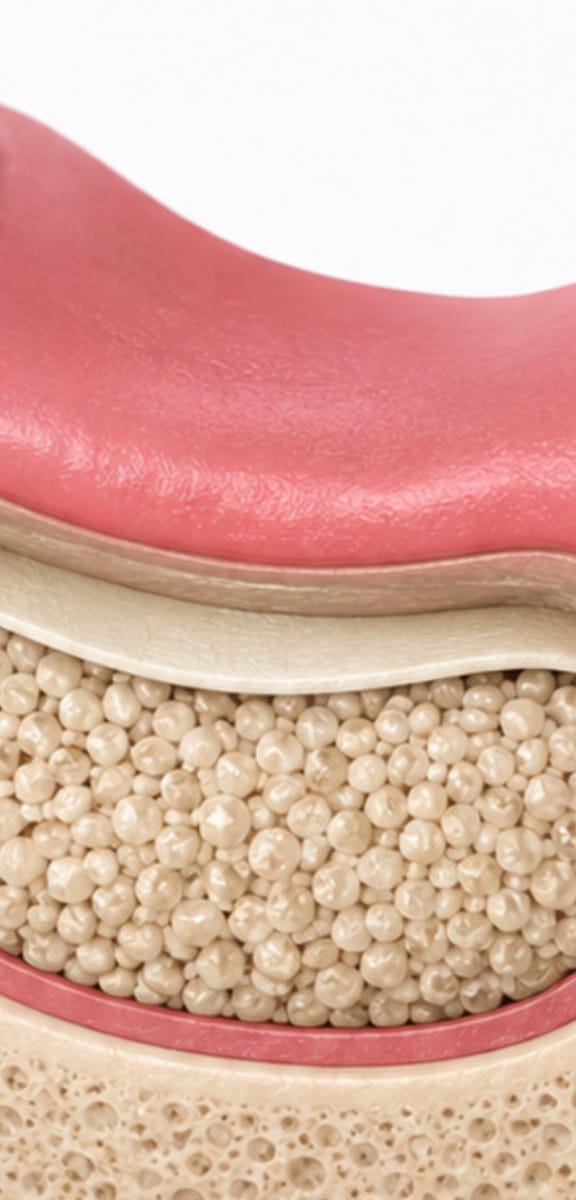
Dental implants need adequate bone in an appropriate position. A graft may be considered when the planned implant site lacks enough width or height. It is an additional procedure, not a routine requirement for everyone having an implant.
At Tomlinson Dental, we assess the proposed tooth replacement and the supporting bone together. We can explain what the examination and imaging show, why grafting is being considered, and what alternatives are available.
Sources: Guy’s and St Thomas’: Bone grafting
What affects the bone available for implants?
The shape of the jaw, changes after tooth loss, gum disease, and previous treatment can affect an implant site. The visible gap does not show the full condition of the bone beneath it.
Planning may involve three-dimensional imaging when it is needed to assess the site. Our technology page explains the imaging available at the practice. The assessment also considers nearby structures and the position of the final tooth.
Different grafts serve different purposes
Preserving or rebuilding a site
A graft may be considered at an extraction site or to increase the dimensions of a healed area. The purpose and timing depend on the planned restoration.
Choosing the material
Materials can come from your own bone, a donor source, an animal source, or a manufactured substitute. Ask which material is proposed and discuss any personal or medical concerns before treatment.
Some upper back-tooth sites require assessment of the sinus as part of implant planning. Ask whether this changes the procedure or whether a specialist referral is appropriate.
Sources: Guy’s and St Thomas’: Bone grafting
Assessment, surgery, and healing
Plan the procedure
Review the medical history, imaging, alternatives, and risks. Ask whether grafting and implant placement are planned together or at separate visits.
Place the graft
The technique, anesthesia, and material depend on the site. The treating clinician explains the proposed procedure and wound care.
Allow healing and review
Healing is assessed before the next stage. A graft can add months to treatment, and the original timetable may change if healing is incomplete.
Sources: Guy’s and St Thomas’: Bone grafting
What affects bone-grafting costs?
The extent of the graft, material, imaging, and any additional surgical steps affect the fee. Implant placement and the final tooth replacement may be separate.
Ask for the stages of the whole implant plan, including the graft, reviews, and the approach if further treatment is needed.
Payment and dental benefits
We accept cash and cards. Third-party financing is available, subject to approval.
Although we are not contracted with any dental insurance company, we gladly help submit claims so your provider can reimburse you directly. Payment is due in full at the time of service; we do not provide insurance estimates.
Review insurance and payment optionsBone-grafting questions
No. Healing and the amount of usable bone must be reassessed. Sometimes additional grafting or a different tooth-replacement plan is needed.
Sources: Guy’s and St Thomas’: Bone grafting
Pain, swelling, infection, or inadequate healing can occur. Site-specific risks and medical factors need discussion with the clinician before you agree to treatment.
Sources: Guy’s and St Thomas’: Bone grafting
Provide your medication list, health history, and tobacco or nicotine use. Do not stop prescribed medication on your own; ask for instructions specific to your plan.
Follow the written instructions from the treating team. Cleaning, eating, activity, and review arrangements depend on the procedure. Contact the office about worsening symptoms or concerns rather than relying on generic aftercare advice.
Related care


Discuss Your Implant Plan
We’ll assess the site and explain whether grafting is needed before proceeding with an implant.
3907 North Boulevard, Tampa, FL 33603
Find us in Tampa, FL


Medically reviewed by Angella Tomlinson, DDS, PA