
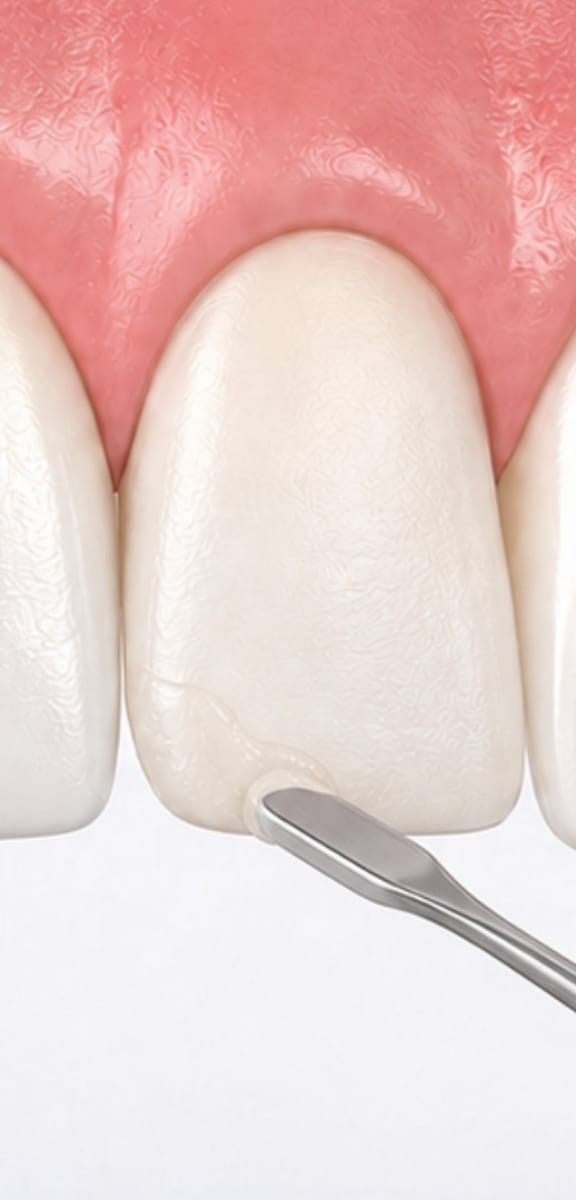

What is dental bonding?
Dental bonding uses tooth-colored composite resin to change or repair part of a tooth. The material is shaped on the tooth and hardened with a curing light. It may be used for a small chip, an uneven edge, or a selected gap.
At Tomlinson Dental, we examine the tooth and your bite before recommending a cosmetic repair. Pain, decay, or a crack may need different treatment rather than simply covering the surface.
A focused change
Bonding can be useful when only a small area needs attention. It is not a way to strengthen every damaged tooth or correct every spacing problem. We’ll discuss whether a filling, veneer, crown, or orthodontic treatment is more appropriate.
Sources: ADA: Veneers · ADA: Tooth-colored fillings
What happens at a bonding appointment?
Choose the change and shade
We agree on the area to treat and the appearance you want. If you are considering whitening, discuss it before matching the resin.
Shape the resin
The tooth surface is prepared for adhesion. Resin is added and shaped, then hardened with a special light. Whether numbing is needed depends on the work involved.
Finish and check
The material is polished and the bite checked. Let us know if the repaired tooth feels high or catches when you close your teeth.
Sources: ADA: Veneers
What affects the cost of bonding?
The fee depends on the number of teeth, the size and location of each repair, and whether decay or another problem needs treatment first.
Ask whether your plan is for cosmetic reshaping or restoring a damaged tooth, and whether polishing or later repairs carry separate fees.
Payment and dental benefits
We accept cash and cards. Third-party financing is available, subject to approval.
Although we are not contracted with any dental insurance company, we gladly help submit claims so your provider can reimburse you directly. Payment is due in full at the time of service; we do not provide insurance estimates.
Review insurance and payment optionsWhen might veneers be a better option?
Bonding
Resin is shaped directly on the tooth and may be suitable for a limited change. Ask about stain resistance, maintenance, and how a repair would be handled.
Porcelain veneers
A veneer is a custom covering for the front of a tooth. It may suit a broader change in appearance but involves laboratory work and usually irreversible enamel preparation.
We can compare veneers with bonding for your particular teeth. Neither option moves the roots or treats an underlying bite problem.
Sources: ADA: Veneers
How do I look after bonded teeth?
Brush with fluoride toothpaste and clean between your teeth daily. Bonding can stain, wear, or chip, so avoid biting hard objects and tell us about grinding or clenching.
At checkups, we can assess the repaired area and discuss polishing, repair, or replacement if it changes. A repairable chip does not always mean the entire restoration must be replaced, but an examination is needed.
Sources: ADA: Veneers · ADA: Tooth-colored fillings
Dental bonding questions
The resin will not lighten with whitening gel. Whitening neighboring teeth can create a mismatch, so discuss the order of treatment first.
Sources: ADA: Teeth whitening
That depends on how the tooth was prepared and why it was treated. Ask about the proposed preparation before deciding; do not assume every bonded repair can be removed without affecting the tooth.
There is no fixed replacement date. Bite forces, the size of the repair, and your habits affect wear. We can explain maintenance expectations for the area being treated.
Call for an assessment, especially if there is pain or a sharp edge. We can determine whether the resin can be repaired and check that the natural tooth has not also been damaged.
Related care


Discuss Dental Bonding
Let’s assess the chip, gap, or edge you would like to change and discuss a suitable repair.
3907 North Boulevard, Tampa, FL 33603
Find us in Tampa, FL


Medically reviewed by Angella Tomlinson, DDS, PA